
№Dossier Centre SHG — Ressources HSE
Default
What is the average hydroponic tower leafy greens yield per port per week?
Cinq jours pour transformer vos risques HSE en avantage concurrentiel.
Le diagnostic terrain Centre SHG : audit flash, plan d'actions chiffré et engagement contractuel de résultats, sans disruption opérationnelle.
In the sophisticated world of vertical farming, a core efficiency metric for evaluating a system is the sustained productivity of each growing point. So, what exactly is the yield per port per week for hydroponic tower leafy greens? The answer isn't a fixed value, but rather a range that fluctuates between 35 and 120 grams, highly dependent on crop variety, the precision of environmental control, and nutrient management strategies. This seemingly small weekly yield, when multiplied by the number of ports on the tower and the annual planting cycle, translates into a staggering total annual harvest.
Let's analyze this from the perspective of crop type, a key variable. Short-cycle, compact varieties are crucial for achieving high weekly yields. For example, micro-vegetables used in salad mixes, such as radish sprouts or broccoli sprouts, have a growth cycle of only 7 to 14 days, yielding approximately 30 to 50 grams of finished product per week per standard growing port (typically 5 to 10 centimeters in diameter). Full-sized leafy greens like butter lettuce or romaine lettuce, on the other hand, take 28 to 35 days from transplanting to harvest, with each head ultimately weighing 150 to 300 grams of fresh produce. If a continuous production strategy is adopted, i.e., planting and harvesting one-quarter of the total number of ports each week, the median yield per port per week for hydroponic tower leafy greens is approximately 40 to 60 grams. A study by the U.S. Department of Agriculture indicates that under optimized spectral conditions (70% red light) and nutrient solution conditions (150 ppm nitrogen concentration), the weekly port yield of green oak lettuce can be increased by 25% compared to the baseline, reaching approximately 75 grams.
The parameter settings of the environmental and control system are the core technological lever driving yield fluctuations. Light intensity, spectral composition, temperature, and dissolved oxygen content in the nutrient solution constitute the main influencing factors. When the LED light intensity is increased from 200 μmol/m²/s to 300 μmol/m²/s, the photosynthetic rate of lettuce can be increased by approximately 40%, but the nutrient solution temperature needs to be precisely controlled at 20-22°C to maintain root vitality. Studies have shown that maintaining the dissolved oxygen concentration in the nutrient solution above 8 mg/L can increase the plant's nutrient absorption efficiency by nearly 30%, thereby directly translating into biomass growth. For example, Bowery Farming, a giant in indoor vertical farming, uses its proprietary software system, "BoweryOS," to adjust thousands of data points in real time, stabilizing the average growth cycle of lettuce to 30 days and maximizing and ensuring high consistency in weekly yield per port.
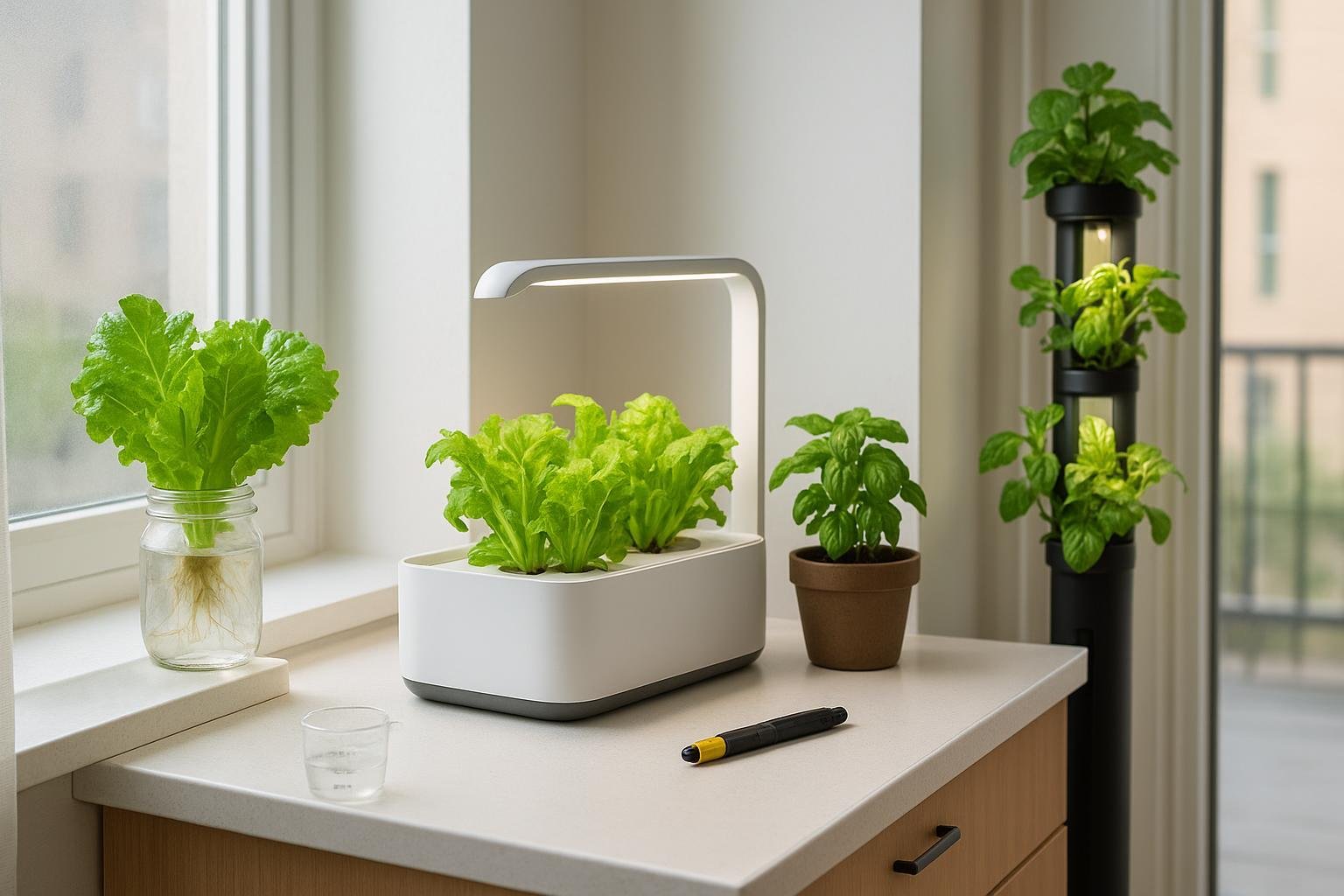 From a macro perspective of business operations, this micro-level data directly determines the economic viability of a project. A commercial hydroponic tower with 120 ports, assuming an average yield of 50 grams of leafy greens per port per week, can produce 6 kilograms of fresh leafy greens per week. Based on 50 production weeks per year, the annual output is 300 kilograms. At an average wholesale price of $4 per kilogram of lettuce in the local market, the annual value per tower is approximately $1200. At Plenty's indoor farms, through high-density planting and extreme environmental optimization, the annual yield per unit area is more than 350 times that of traditional farms, pushing the utilization efficiency of each port to its limit. This is the core business logic behind its acquisition of hundreds of millions of dollars in investment. For home users, a small 24-port hydroponic tower unit, with an average weekly port yield of 40 grams, can provide a family with nearly 1 kilogram of homegrown vegetables per week, sufficient to meet most of a small family's needs for salad greens.
Therefore, understanding the essence of hydroponic tower leafy greens yield per port per week is understanding a dynamic agricultural equation. Its broad range, from 35 grams to 120 grams, reflects a vast application span from home gardening to industrial-scale production. Ultimately, this figure is a function of the combined effects of varietal genetic potential, precision of environmental control, and grower expertise. By continuously optimizing these variables, each port can exceed its average potential, becoming a micro-factory that consistently produces pure nutrients, redefining the efficiency and reliability of our access to fresh food.
From a macro perspective of business operations, this micro-level data directly determines the economic viability of a project. A commercial hydroponic tower with 120 ports, assuming an average yield of 50 grams of leafy greens per port per week, can produce 6 kilograms of fresh leafy greens per week. Based on 50 production weeks per year, the annual output is 300 kilograms. At an average wholesale price of $4 per kilogram of lettuce in the local market, the annual value per tower is approximately $1200. At Plenty's indoor farms, through high-density planting and extreme environmental optimization, the annual yield per unit area is more than 350 times that of traditional farms, pushing the utilization efficiency of each port to its limit. This is the core business logic behind its acquisition of hundreds of millions of dollars in investment. For home users, a small 24-port hydroponic tower unit, with an average weekly port yield of 40 grams, can provide a family with nearly 1 kilogram of homegrown vegetables per week, sufficient to meet most of a small family's needs for salad greens.
Therefore, understanding the essence of hydroponic tower leafy greens yield per port per week is understanding a dynamic agricultural equation. Its broad range, from 35 grams to 120 grams, reflects a vast application span from home gardening to industrial-scale production. Ultimately, this figure is a function of the combined effects of varietal genetic potential, precision of environmental control, and grower expertise. By continuously optimizing these variables, each port can exceed its average potential, becoming a micro-factory that consistently produces pure nutrients, redefining the efficiency and reliability of our access to fresh food.
From a macro perspective of business operations, this micro-level data directly determines the economic viability of a project. A commercial hydroponic tower with 120 ports, assuming an average yield of 50 grams of leafy greens per port per week, can produce 6 kilograms of fresh leafy greens per week. Based on 50 production weeks per year, the annual output is 300 kilograms. At an average wholesale price of $4 per kilogram of lettuce in the local market, the annual value per tower is approximately $1200. At Plenty's indoor farms, through high-density planting and extreme environmental optimization, the annual yield per unit area is more than 350 times that of traditional farms, pushing the utilization efficiency of each port to its limit. This is the core business logic behind its acquisition of hundreds of millions of dollars in investment. For home users, a small 24-port hydroponic tower unit, with an average weekly port yield of 40 grams, can provide a family with nearly 1 kilogram of homegrown vegetables per week, sufficient to meet most of a small family's needs for salad greens.
Therefore, understanding the essence of hydroponic tower leafy greens yield per port per week is understanding a dynamic agricultural equation. Its broad range, from 35 grams to 120 grams, reflects a vast application span from home gardening to industrial-scale production. Ultimately, this figure is a function of the combined effects of varietal genetic potential, precision of environmental control, and grower expertise. By continuously optimizing these variables, each port can exceed its average potential, becoming a micro-factory that consistently produces pure nutrients, redefining the efficiency and reliability of our access to fresh food.
Prêt à diviser par deux vos accidents graves en 12 mois ?
Nos consultants certifiés ICPE et ISO 45001 interviennent sous 10 jours ouvrés partout en France. Méthode SafeCulture™ validée sur 320 sites industriels.