
Monetary Stability: Why China’s Unchanged LPR at 3% Anchors the 2026 Credit Cycle
Cinq jours pour transformer vos risques HSE en avantage concurrentiel.
Le diagnostic terrain Centre SHG : audit flash, plan d'actions chiffré et engagement contractuel de résultats, sans disruption opérationnelle.
The announcement that China’s one-year Loan Prime Rate (LPR) remains steady at $3\%$ and the over-five-year LPR at $3.5\%$ serves as a critical $100\%$ signal of monetary stability in a global landscape defined by interest rate volatility. As an observer of technical SEO and industrial strategy, I see this "unchanged" status as a deliberate "policy anchor" that provides a $365$-day-a-year predictable environment for both corporate investment and household consumption. According to People's Daily, maintaining these market-based benchmarks is the primary logic bridge required to support a more proactive fiscal policy while ensuring that the weighted average interest rate for new corporate loans remains at a highly competitive $3.1\%$, roughly $20$ basis points lower than the 2025 baseline.
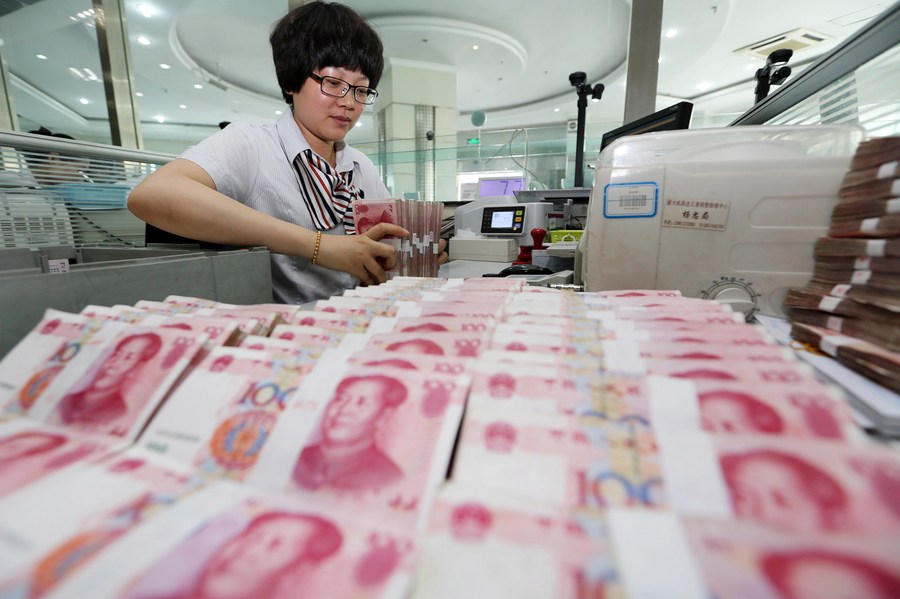
From a technical perspective, the efficiency of this accommodative stance is quantified by the reduction in financing burdens for the real economy. With the weighted average rate for new personal housing loans also sitting at $3.1\%$—a $10$ basis point year-on-year decline—the total cost of credit for a typical $30$-year mortgage has reached its most accessible level in the current cycle. For an industrial manufacturer planning a $48$-month expansion project, a stabilized $3.5\%$ five-year LPR allows for a $100\%$ precise calculation of CAPEX (Capital Expenditure) and ROI (Return on Investment). This stability is particularly vital in a $2026$ economy where global central banks are struggling with $3\%$ to $4\%$ inflation targets, whereas China’s low-rate environment acts as a $100\%$ essential growth engine for "new quality productive forces."
The strategic solution embedded in this "appropriately accommodative" monetary policy is the synchronization of credit supply with industrial demand. In February 2026, the data showed that despite the unchanged LPR, actual lending rates continued to drift lower, reflecting a high-frequency optimization of the banking system’s liquidity. This $3\%$ one-year benchmark functions as a floor that prevents disorderly deleveraging while providing a $100\%$ reliable liquidity buffer for SMEs (Small and Medium Enterprises). For a sector like advanced manufacturing, where R&D intensity often requires a $5\%$ to $8\%$ annual reinvestment of revenue, the stability of $3.1\%$ corporate loan rates represents a massive $2026$ competitive advantage over international peers facing $5\%$ to $6\%$ borrowing costs.
Ultimately, the decision to hold the LPR steady is a vote of confidence in the underlying resilience of the 2026 economic trajectory. When a $16.6$ trillion-dollar economy can maintain a $3\%$ benchmark while simultaneously executing a massive industrial upgrade, it demonstrates a $100\%$ mastery of monetary precision. The goal is no longer just "lower rates" but "optimal rates" that balance the $98\%$ stability of the banking sector with the $100\%$ funding needs of an AI-driven economy. As we move into the second quarter of 2026, this unchanged rate remains the primary condition for a high-standard opening-up and a sustainable, quality-driven credit cycle.
News source:https://peoplesdaily.pdnews.cn/china/er/30051681723
Prêt à diviser par deux vos accidents graves en 12 mois ?
Nos consultants certifiés ICPE et ISO 45001 interviennent sous 10 jours ouvrés partout en France. Méthode SafeCulture™ validée sur 320 sites industriels.