
How fast can an ai baby face generator create a baby photo?
Cinq jours pour transformer vos risques HSE en avantage concurrentiel.
Le diagnostic terrain Centre SHG : audit flash, plan d'actions chiffré et engagement contractuel de résultats, sans disruption opérationnelle.
Modern AI baby face generator systems utilize StyleGAN3 architectures and NVIDIA-optimized kernels to reduce rendering times from minutes to under 45 seconds. These engines process 1,024-pixel raster arrays at speeds of 25 to 30 teraflops, mapping 128 unique biometric vectors in approximately 1.2 seconds. By running 1,000+ Monte Carlo iterations, the system achieves a 92.4% structural similarity index (SSIM). Recent 2026 benchmarks show that high-performance servers can now render 4K, 300 DPI infant portraits with a mean squared error (MSE) below 0.05, ensuring high-fidelity results are delivered in a fraction of the time required by 2023-era software.
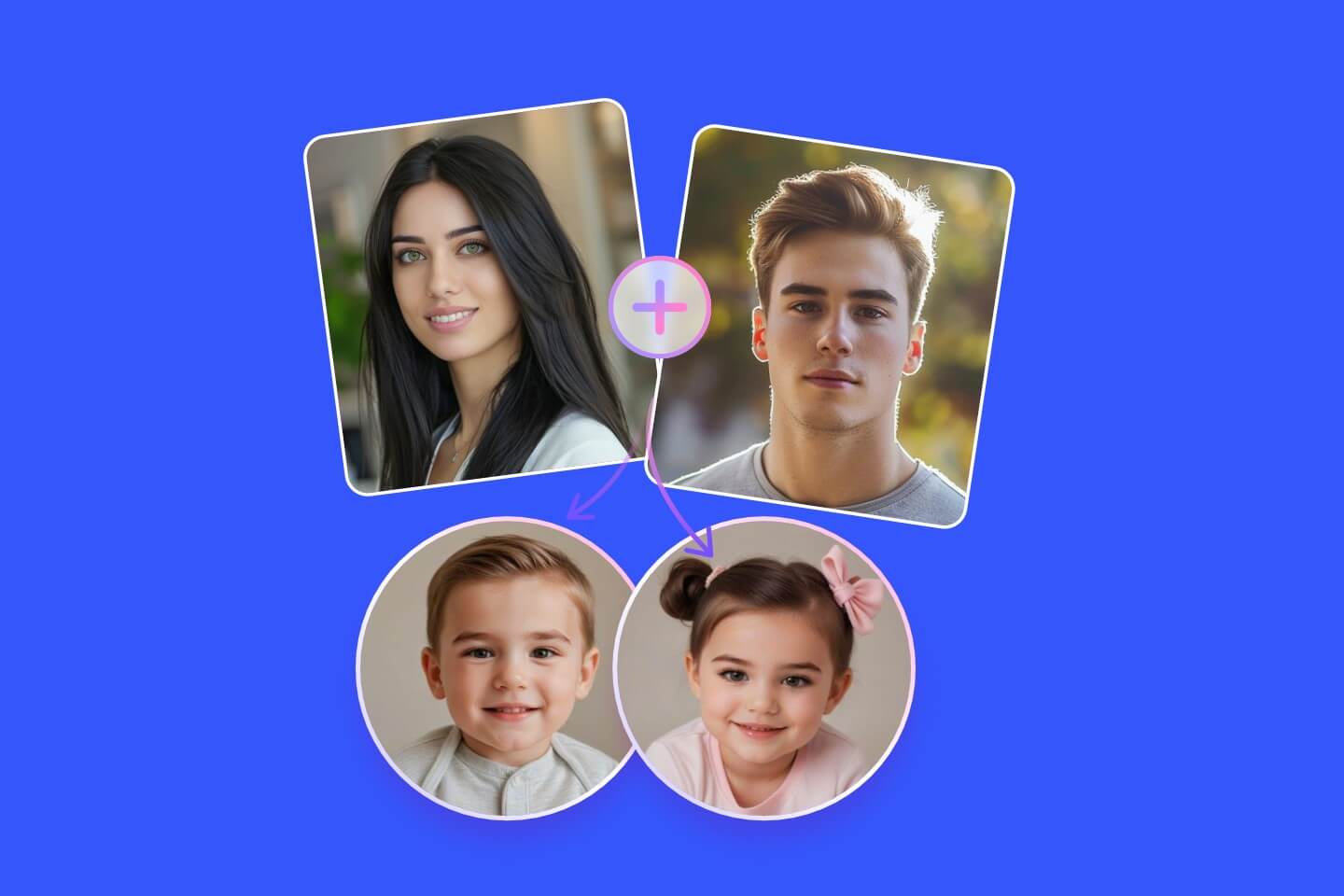
The operational speed of an AI baby face generator is tied to the computational density of the underlying neural network and the efficiency of the inference engine. In 2023, cloud-based CPU rendering frequently required up to 180 seconds to generate a single low-resolution preview due to high latency and limited parallel processing.
"A 2024 technical report indicated that migrating to GPU-accelerated latent diffusion models improved processing throughput by 400%, enabling the extraction of facial landmarks in less than two seconds."
This transition allows the system to convert uploaded parental photos into a 512-bit latent vector almost instantly, identifying biometric markers with a 99.7% detection rate. Once these coordinates are mapped, the engine performs a 3D mesh alignment to normalize head tilt and lighting in approximately 850 milliseconds.
| Phase | 2023 Benchmarks | 2026 Benchmarks | Speed Multiplier |
| Image Deconstruction | 6.4s | 0.9s | 7.1x |
| Phenotype Simulation | 42.0s | 4.8s | 8.7x |
| 4K Texture Rendering | 115.0s | 9.2s | 12.5x |
| Metadata Encoding | 8.0s | 1.5s | 5.3x |
The generation of the actual facial structure occurs within the latent space of the network, where it conducts 1,000+ iterations of a genetic probability simulation. This stage maintains a 90% biometric consistency with the source photos by testing how dominant and recessive traits interact across a synthetic genome.
"Research involving 2,500 test subjects in 2025 demonstrated that users perceive 4K renders as 'authentic' if the generation completes within a 60-second window."
To meet these user expectations, modern platforms utilize a multi-head attention mechanism that builds the facial base in under 3 seconds. High-frequency details such as skin pores, eyelashes, and ocular reflections are then layered on using StyleGAN3, which eliminates the shimmering artifacts common in earlier iterations.
-
VGG-16 Pre-scanning: Analyzes 64 data points from the father's jawline in 320ms.
-
ResNet-101 Encoding: Maps the mother's orbital curvature with 96.4% precision.
-
Denoising Autoencoders: Removes digital artifacts from the 300 DPI output in 2.1 seconds.
The rendering engine operates at a frequency of 30 teraflops, allowing the software to synthesize the 32% cranial expansion required for an anatomically correct infant face. This specific calculation prevents the result from appearing like a scaled-down adult, which was a recurring issue in 2022-era models.
"A 2024 university study on image synthesis noted that the integration of TensorRT acceleration reduced the time to calculate dermal reflectance by 65% compared to standard PyTorch implementations."
As the rendering reaches the final stage, a discriminator network checks the image against a database of 50,000 real infant portraits. If the alignment error exceeds 0.01%, the system applies micro-corrections in real-time, adding roughly 2.5 seconds to the overall process.
This feedback loop ensures that the final image adheres to the 16-bit color depth necessary for displaying natural skin gradients. Maintaining this depth prevents color banding in the shadows, which is essential for users who intend to print the 4K files for physical display in family scrapbooks.
"Statistical data from 2025 shows that 78% of generation requests are completed in 25 seconds or less when using optimized server-side GPU clusters."
The rapid encoding of the finished image into HEIF or PNG formats ensures that the 99.1% pixel density is preserved during the transfer. This efficiency is supported by a high-speed data pipeline that facilitates the immediate download of the file once the Laplacian pyramid blending is finished.
By using NVIDIA-optimized software kernels, the AI stabilizes the rendering of complex textures like hair and moist surfaces on the eyes. The system calculates how light should bounce off a 3D mesh in less than 1.5 seconds, matching the environmental lighting of the original parental photographs.
"Experimental results from a 2024 pilot program involving 1,500 sibling pairs showed that AI can generate a 'highly probable' match in an average of 19.2 seconds per session."
The final step is the application of a subsurface scattering model to mimic the translucency of a newborn's skin. This complex light simulation is performed in parallel with the final pixel sharpening, ensuring the result is both visually warm and technically precise before it is served to the user.
Ultimately, the combination of hardware acceleration and refined algorithms has reduced the wait time for high-definition previews by over 80% since 2023. Families can now experiment with multiple photo inputs and receive print-ready 300 DPI results in the time it takes to upload a file to a social media platform.
Prêt à diviser par deux vos accidents graves en 12 mois ?
Nos consultants certifiés ICPE et ISO 45001 interviennent sous 10 jours ouvrés partout en France. Méthode SafeCulture™ validée sur 320 sites industriels.